From Lagos to Mars: AI for Weather Prediction and Energy Management
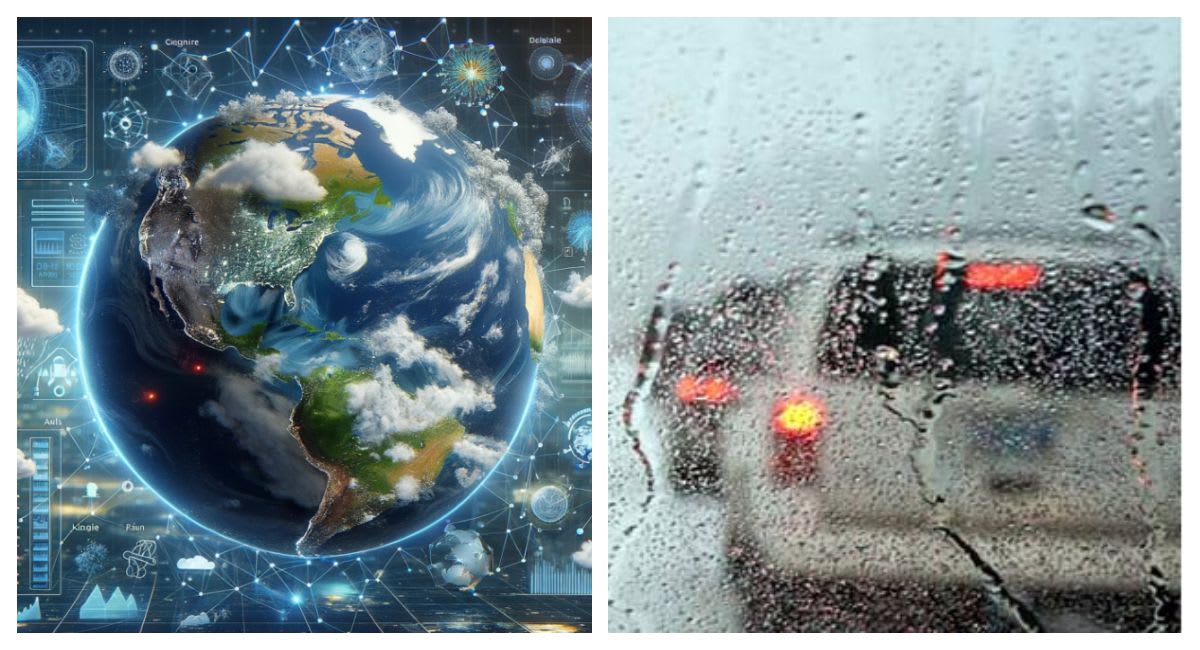
The Intersection of AI, Climate Challenges, and Martian Weather
Lagos, Nigeria’s vibrant megacity, is a symbol of dynamism, rapid growth, and resilience. However, like many global cities, it faces significant challenges in climate adaptation, energy management, and infrastructure planning. While these issues are present on Earth, researchers are also working on similar problems on a cosmic scale — understanding weather patterns on Mars. At first glance, Lagos and Mars could not be more different. Yet both present complex data challenges that require innovative approaches in artificial intelligence (AI).
This unusual connection defines the work of Emmanuel Adefila, a software engineer and AI specialist with a background in biochemistry and an MSc in Artificial Intelligence from the University of Bradford, UK. Among his projects is one focused on detecting and forecasting Martian weather patterns using machine learning and time-series models. This experience highlights not only the challenges of analyzing limited data from another planet but also the potential to apply similar AI techniques to climate and energy issues faced by cities like Lagos.
Predicting Weather on Mars with AI
Adefila’s project explored how to forecast Martian atmospheric conditions using advanced AI models. Unlike Earth, where weather data is abundant, Mars presents a unique challenge: limited and irregular datasets captured by orbiters and rovers. Traditional statistical approaches struggle to extract meaningful trends from such sparse information.
To address this, he deployed a combination of ARIMA, SARIMAX, Long Short-Term Memory (LSTM) networks, Prophet, and NeuralProphet to model Martian climate data. Each approach brought unique strengths: ARIMA captured historical trends, LSTMs handled long-term dependencies, and Prophet identified seasonality in noisy data. Together, they produced insights into recurring climate patterns on Mars, such as temperature fluctuations and dust storm cycles.
The project showed how AI could find order in incomplete, complex datasets. More importantly, it demonstrated Adefila’s ability to translate raw scientific data into actionable forecasts — a skill with direct relevance to Earth’s climate and energy challenges.
Lessons for Lagos and Beyond
Although the research was space-oriented, the methodology closely aligns with issues faced by Lagos. Nigeria’s commercial capital is vulnerable to flooding, heatwaves, and unstable electricity supply. Predictive models like those applied to Martian weather can be adapted to anticipate patterns in rainfall, energy demand, or solar availability, helping policymakers and utilities respond more effectively.
For example, renewable energy management depends on accurate forecasting. Predicting solar radiation levels for photovoltaic panels or wind speeds for turbines allows providers to balance supply and demand. Just as Adefila’s models detected Martian seasonal patterns, similar techniques could be applied to Lagos to optimize energy grids and reduce costly blackouts.
Urban climate adaptation is another area of overlap. By applying machine learning to Lagos rainfall and temperature data, AI-driven systems could issue early flood warnings, inform infrastructure investments, and guide disaster response. These parallels show how frontier research on Mars has surprising, practical implications for Earth.
Expanding AI Across Scientific Domains
The Mars project is part of a larger body of work in which Adefila applies AI across domains with societal relevance. His portfolio includes projects related to healthcare, finance, and environmental monitoring. Together, these projects highlight a consistent approach: using AI to discover patterns in complex, noisy datasets to address pressing challenges in health, finance, energy, and the environment.
Nigeria’s Role in AI and Climate Innovation
Nigeria is already recognized as a leader in Africa’s fintech revolution, but its next frontier is in climate and energy innovation. With rapid urbanization and increasing exposure to climate risks, cities like Lagos need predictive systems that help manage resources and protect communities. AI models that forecast weather fluctuations, energy demand, or disaster risks could become central to sustainable development strategies.
By linking his Mars-focused project to these challenges, Adefila demonstrates how global knowledge can be localized for national benefit. What began as a study of extraterrestrial weather patterns reveals methodologies that can support renewable energy management, urban planning, and climate adaptation in Nigeria.
This work also underscores the importance of international collaboration. Techniques refined in global research contexts can be adapted to African realities, while Nigerian expertise contributes new perspectives to global scientific problems.
Looking Ahead: From Lagos to the Stars
“From Lagos to Mars” is more than a phrase — it captures the spirit of research that bridges domains and geographies. Whether analyzing dust storms on the Red Planet or rainfall cycles in Nigeria, the same AI principles can illuminate hidden patterns and guide better decisions.
As Nigeria invests in AI talent and digital infrastructure, projects like Adefila’s suggest a future where the country is not just adopting imported technology, but shaping the global conversation. By applying cutting-edge AI both to local challenges and frontier science, Lagos can establish itself as a hub of innovation with impact far beyond its borders.
In both Lagos and on Mars, the future depends on understanding, predicting, and adapting to complex environments. With AI as the bridge, the distance between them is not as vast as it seems.


Comments
Post a Comment