Is This the Future of Transport? Madrid Tests First Spanish-Developed Driverless Bus
Introduction to Autonomous Mobility in Madrid
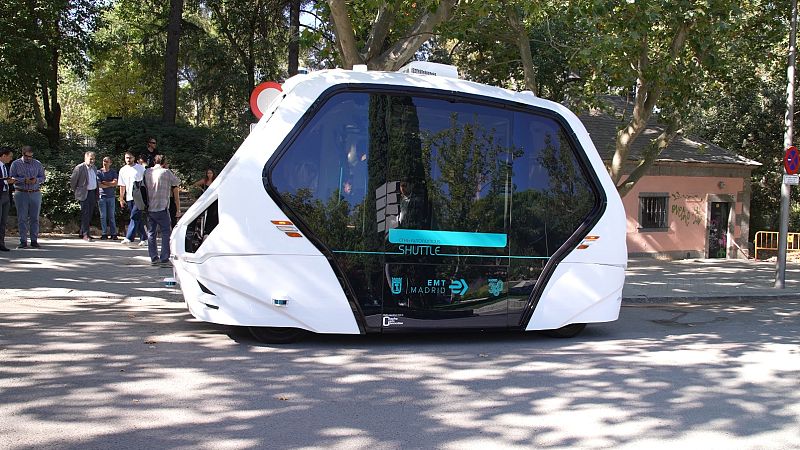
A new form of transportation has made its way into the heart of Madrid, bringing with it a glimpse into the future of mobility. A fully autonomous electric minibus has become a temporary tenant in the Casa de Campo park, marking an exciting step forward for urban transport. This initiative, part of a pilot project by the Municipal Transport Company (EMT) and the Automotive Technology Centre of Galicia (CTAG), aims to test this cutting-edge technology in real-world traffic conditions.
The Pilot Project Details
The minibus, which was developed in Spain, has been operating in the park since 15 September. It is designed to accommodate up to 12 passengers and runs from Monday to Friday between 12 p.m. and 5 p.m. The service follows a circular route of 1.8 kilometers with six designated stops. Importantly, the service is free of charge and will be available until 24 October as part of European Mobility Week activities.
Public Reaction and Expert Insights
The initial days of operation have generated considerable interest. Passengers who have taken the bus have expressed their excitement about experiencing a driverless vehicle, while EMT employees have shown pride in being involved in such a groundbreaking project.
César Omar Chacón Fernández, head of the EMT's Rolling Stock Planning Division, shared his positive experience with Euronews. He stated, "This bus is one of the best I have ever tested." He added that the technology is well-integrated, noting that the bus does not behave erratically or robotically like some other vehicles.
Addressing Driver Shortages
This type of vehicle presents a potential solution to a significant issue in Europe: the shortage of professional drivers. While Madrid currently does not face this staffing problem, there is an opportunity to enhance the safety and efficiency of public transport through the use of such technology.
Technological Components and Development
The vehicle is entirely electric, although many of its technological components are sourced from abroad. The assembly, software, and systems integration were carried out in Galicia, northern Spain. CTAG has equipped the bus with sensors, cameras, GPS, and a central processing unit (CPU) that functions as the vehicle’s "brain."
Complementing Public Transport
The collaboration between EMT and CTAG is not aimed at replacing human drivers but rather at exploring how this technology can support and enhance public transport services. In other parts of Europe, the lack of professional drivers is becoming increasingly problematic, and experts believe that autonomous buses could help address this challenge.
Safety and Reliability
In Madrid, some residents have raised concerns about the reliability of the project. However, EMT emphasizes that the system is safe and has been under development for several years. César Omar Chacón Fernández noted, "This is not the first time we have tested this technology: we have been working with autonomous vehicles for four or five years, and this is one of the most reliable we have tested."
Advanced Safety Features
The bus is equipped with an advanced system that monitors various aspects in real-time, including speed, acceleration, trajectory, door status, accessibility ramps, and indicators. This integral control system enhances safety and improves driving efficiency.
Level 4 Automation
The autonomous driving system operates at level 4 automation, meaning the minibus can recognize roads, traffic lights, cyclists, and pedestrians. It makes independent decisions regarding acceleration, braking, and turning.
Human Oversight
Despite being fully autonomous, the vehicle always has a safety operator on board. Their role is to monitor the journey and intervene if necessary, such as opening doors or manually braking in case of an emergency. As César Omar Chacón Fernández explained, "It is a fully autonomous line, but we never leave anything to chance."


Comments
Post a Comment