Korean Shipyards Lead Zero-Carbon Ammonia Propulsion Revolution
The Rise of Ammonia as a Game-Changer in the Shipping Industry
The global shipping industry, responsible for transporting 99% of maritime cargo, has long relied on fossil fuels such as diesel and heavy oil. However, with the urgent push toward achieving carbon neutrality by 2050, ammonia is gaining traction as a promising alternative fuel that could lead the way to a zero-carbon shipping era. Unlike traditional fuels, ammonia does not emit carbon dioxide when burned, making it an attractive option for reducing greenhouse gas emissions. Additionally, it is easier to store and transport compared to other eco-friendly alternatives like hydrogen, which requires cryogenic cooling. The well-established supply chain for ammonia, driven by its long-standing use in the fertilizer and chemical industries, further supports its potential as a viable fuel.
South Korean shipbuilders are at the forefront of this transformation, leading the charge in developing ammonia-powered vessels. Companies such as HD Hyundai, Hanwha Ocean, and Samsung Heavy Industries are investing heavily in research and development to secure a competitive edge in the emerging market for zero-carbon ships. This shift could disrupt the ship engine market, which has historically been dominated by European firms. For decades, a few European companies have held a monopoly over the design and production of ship engines. With the new focus on ammonia propulsion, South Korean shipbuilders aim to take control of the next-generation fuel engine market.
Three Shipbuilders Compete in Ammonia Technology
Samsung Heavy Industries recently announced that it has received basic design certification from the French classification society Bureau Veritas (BV) for an ammonia-based hydrogen fuel cell-powered crude oil carrier. This certification ensures that vessels built according to this design will be safe and technically feasible. Samsung’s technology involves separating ammonia into hydrogen and nitrogen, with the hydrogen then being used in fuel cells to generate electricity and power the ship through a chemical reaction between hydrogen and oxygen.
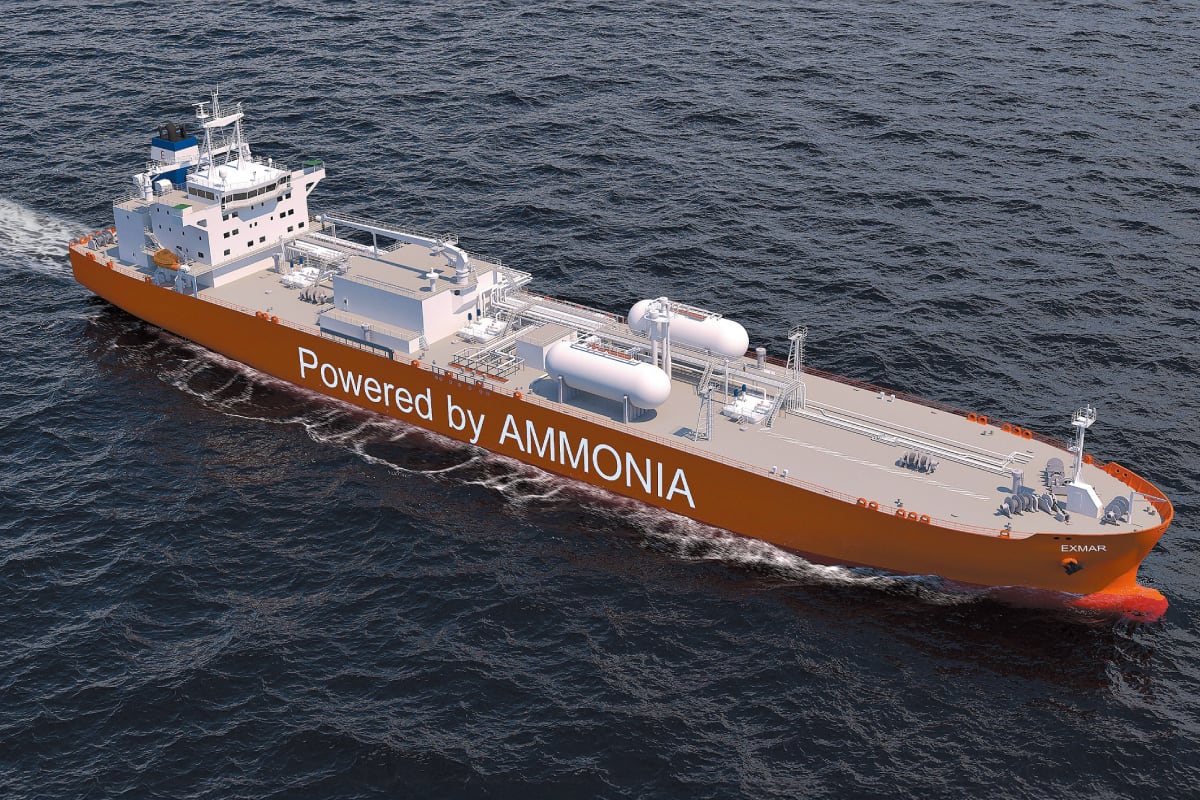
HD Hyundai is also making significant strides in the ammonia propulsion sector. The company is currently constructing ammonia-powered vessels that use ammonia as their primary fuel. In March 2023, HD Hyundai secured an order from Belgian shipping firm EXMAR for four 45,000 cubic meters-class ammonia carriers—the first of its kind. Since then, the company has acquired a total of eight ammonia-powered vessels, with the first delivery scheduled for the first half of next year. In addition, HD Hyundai developed the world’s first high-pressure direct injection dual-fuel ammonia engine in October of last year, showcasing its commitment to advancing ammonia-related technologies.
Hanwha Ocean recently unveiled a 174,000 cubic meters-class zero-carbon LNG carrier model at GasTek 2025, one of the largest gas exhibitions in the world. The carrier is designed to use an ammonia gas turbine, which can combust 100% ammonia. The company is also working on seven container ships valued at 2 trillion Korean won, ordered by Taiwan’s Yang Ming Marine, which are designed to be “ammonia-ready,” meaning they can be retrofitted in the future to run on ammonia instead of LNG.
Ammonia as the Key to Eco-Friendly Shipping
Currently, Germany’s MAN holds a dominant position in the global ship engine market, with 80–85% of large ship engines based on its designs. Korean shipbuilders have traditionally acted as license producers, lacking the ability to design their own fuel systems. However, HD Hyundai’s ammonia dual-fuel engine, developed using proprietary high-pressure direct injection technology, represents a departure from MAN’s existing designs. Hanwha Ocean and Samsung Heavy Industries are also working to develop independent ammonia propulsion systems. If these three companies manage to vertically integrate the entire ammonia propulsion system, analysts believe that South Korea could emerge as a leader not only in shipbuilding but also in engine and propulsion technology.
The International Maritime Organization (IMO) set a goal in 2023 to achieve “Net Zero” emissions by 2050, aiming to reduce greenhouse gas emissions to zero on a net basis compared to 2008 levels. Given that ships typically have a lifespan of 25–30 years, the need to build eco-friendly vessels is urgent to avoid obsolescence after 2050. According to market research firm Lucintel, the ammonia-fueled ship market is expected to grow at a compound annual rate of 17.6% from 2024 to 2030, highlighting the increasing importance of this fuel in the future of the shipping industry.


Comments
Post a Comment