LG, Samsung Target Built-In Appliance Market with Tech Innovations
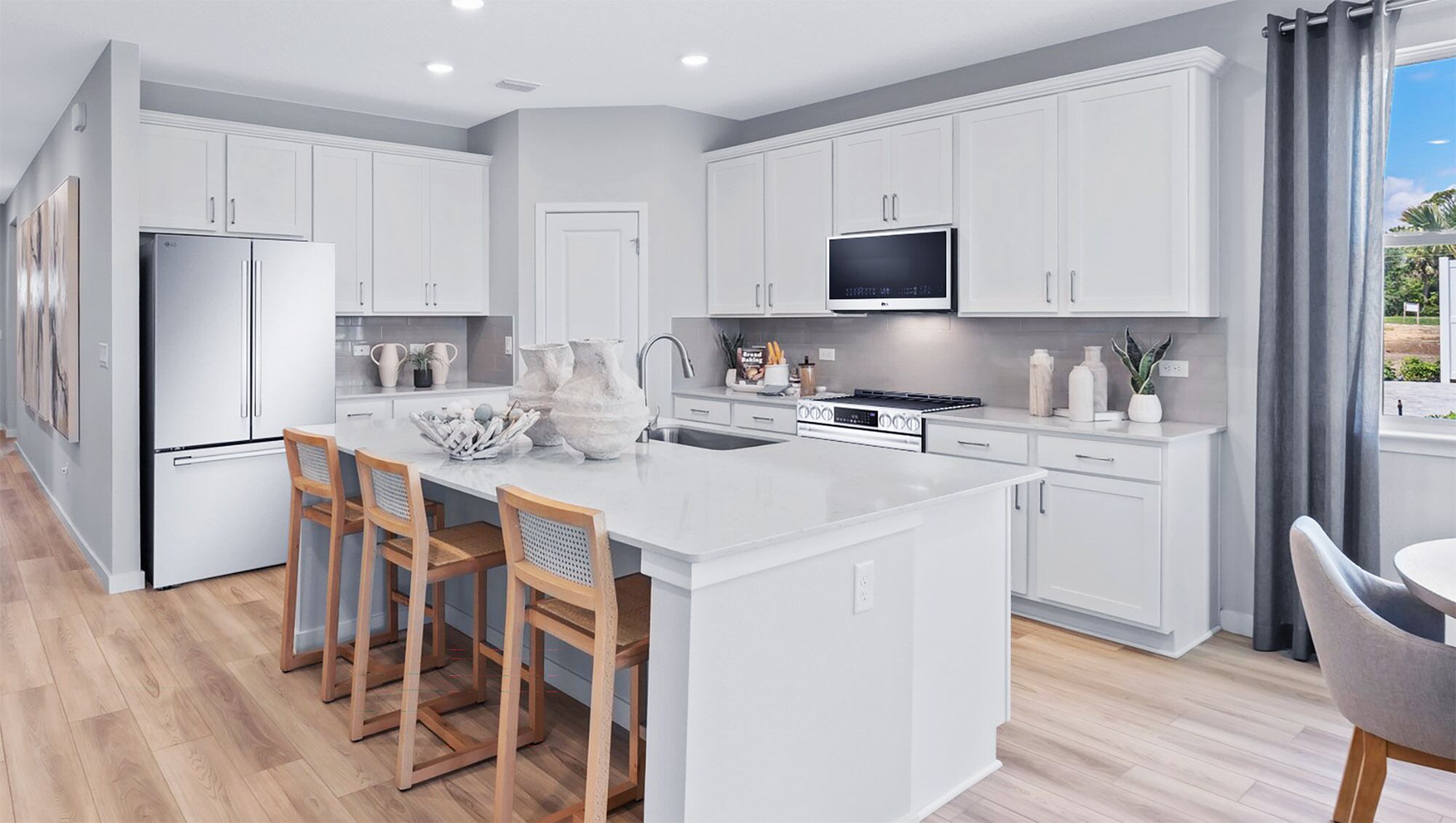
LG Electronics recently signed an exclusive home appliance supply agreement with Century Communities, a major U.S. builder. Builders are companies that construct residential or commercial buildings and integrate appliances as built-in fixtures. By partnering with a large U.S. builder, LG Electronics is expanding its B2B (business-to-business) built-in appliance business in the U.S. market.
Century Communities ranks among the top 10 builders in the U.S. The contract runs until 2029. LG Electronics’ high-efficiency and AI-powered appliances—including refrigerators, washing machines, dryers, dishwashers, and ovens—will be installed in all new homes built by Century Communities in the U.S.
Korean home appliance companies are targeting the built-in appliance market. Built-in appliances are designed to be flush with cabinetry, avoiding protrusions. They require precise installation in limited spaces and high-quality standards. While local brands like Whirlpool, GE, and Miele have dominated the built-in appliance market in the U.S. and Europe, Korean companies are gaining recognition for their technological advancements. LG Electronics reported over 70% year-on-year sales growth in its builder business segment during the first half of this year, a 2.5-fold increase compared to the same period in 2023.
Korean appliance makers are particularly recognized for their hinge and heat dissipation technologies, which enable appliances to fit seamlessly into residential spaces.
◇Strengthening Built-in Market Strategy
Korean companies previously struggled to enter overseas built-in markets, as construction firms typically contracted local appliance brands from the start of projects. In the U.S., Whirlpool and GE dominated, while Miele led in Europe.
However, the B2B market is gradually opening as Korean brands gain recognition. A source from the home appliance industry noted, “Korean companies are praised for their advanced technology and after-sales service.” Samsung Electronics and LG Electronics have launched premium built-in kitchen appliance brands—Dayco and SKS, respectively—to focus on global markets. According to Data Bridge Market Research, the built-in appliance market is projected to grow from $26.11 billion (approximately 37.9 trillion Korean won) in 2023 to $37.41 billion (approximately 54.2 trillion Korean won) by 2032.
The core of built-in appliances lies in kitchen cabinetry. Korean companies are introducing appliances that fit into minimal gaps and feature sleek designs. Samsung’s refrigerators can be installed with just a 4mm gap on either side—the thickness of two 500 Korean won coins. Despite tight spacing, the refrigerator door opens over 90 degrees. This is achieved by adjusting the hinge’s axis to reduce protrusion at the corners. By reducing insulation thickness to 8mm, Samsung increased door-side storage space by 22% and added 25 liters of capacity compared to conventional models. Its built-in dishwasher eliminates handles, using sensors to open the door when a hand approaches. Samsung stated, “This allows for a cohesive kitchen interior.”
LG Electronics also unveiled a refrigerator installable in a 4mm wall gap, featuring a dual-axis hinge that rotates inward, preventing the door from hitting walls. Its front heat dissipation technology draws in and expels air from the refrigerator’s front, minimizing the need for rear clearance. Previously, heat discharge required significant space behind the appliance, often causing it to protrude. This innovation reduces rear gaps. LG is expanding its built-in lineup with products like a retractable hood that fits into countertops and combined ovens with induction cooktops.
◇Chinese Companies Catching Up
Chinese firms are also intensifying their pursuit of the built-in appliance market. As Korean companies target the U.S. market, Chinese brands are closing the gap.
TCL developed hinge technology enabling refrigerator installation in under 1cm of wall space, with floor-based heat dissipation for tight side gaps. TCL stated, “Refrigerators can be installed in cabinets or attached to walls in various configurations.” Hisense released a built-in oven with multi-functional features like air frying and pizza baking, consolidating functions for limited spaces. Its built-in dishwasher won a CES Innovation Award, reflecting rising Chinese technical prowess. Haier, a leading Chinese appliance brand, acquired GE’s appliance division to strengthen its U.S. market presence.


Comments
Post a Comment