NYU Law Professor Warns AI Erodes Human Dignity, Privacy
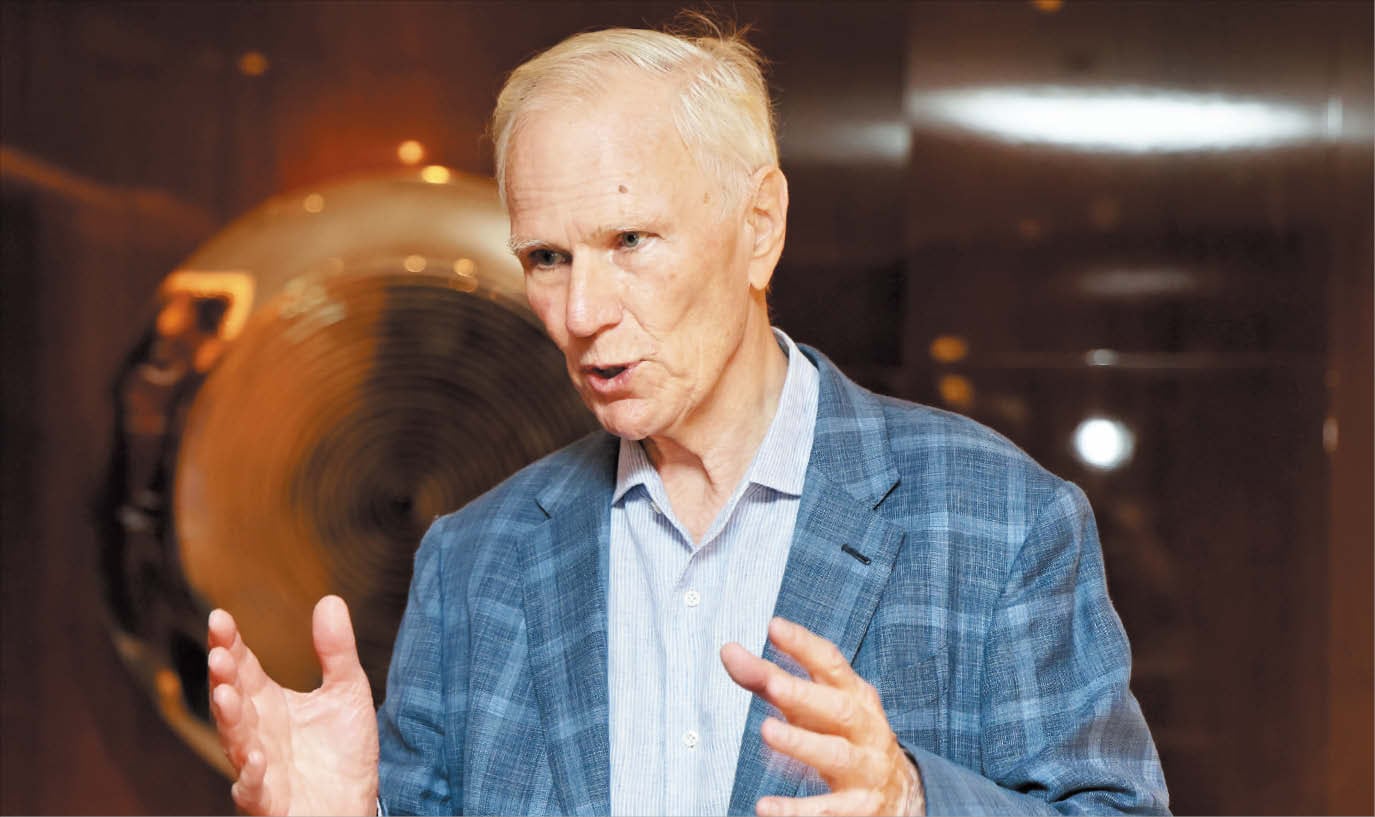
“Artificial intelligence (AI) is undermining human dignity.”
Philip Alston, a distinguished professor at NYU Law School, said in an interview with this newspaper on the 16th of last month, “AI is not only infringing on privacy but is also being used as a means of control in the workplace,” adding, “It could even damage the human warmth that is barely left in modern society.” Professor Alston, an international law scholar from Australia, is known as a ‘Doomer’ (a pessimist warning of doom) who has been alerting the dangers of AI. He laid the groundwork for international human rights norms while serving as the UN Special Rapporteur on Extrajudicial Executions and the Special Rapporteur on Poverty and Human Rights.
At the international human rights conference hosted by the National Human Rights Commission that day, Professor Alston, who delivered the keynote speech, warned that AI is penetrating even the most intimate areas of human life. He stated, “AI records not only individuals’ interests, purchase history, and health abnormalities but also personal struggles such as ‘having difficulties with one’s spouse,’” adding, “We are living in an era where even the most private thoughts, habits, and medical information are being tracked and analyzed.”
While Professor Alston acknowledged, “AI has significant potential for positive uses, such as improving productivity and tracking missing persons,” he also warned, “If this technology is used negatively, governments, police, immigration authorities, and Big Tech could collude to track every movement of individuals.” He emphasized, “The use of AI in the workplace is particularly serious. Employers can monitor how many minutes an employee sits in front of a keyboard and how long their commute takes,” adding, “This is not just a privacy issue but a surveillance and control system on the level of George Orwell’s novel ‘1984.’”
In an era where AI threatens human rights, what is the value of humanity? After a moment of reflection, he answered, “It is human warmth, a warm touch, compassion, and solidarity. However, these are at risk of disappearing in the AI era. When people grow old, instead of worrying and empathizing, they will be given chatbots. But chatbots cannot convey genuine warmth. It is merely fake, artificial warmth. We are at risk of losing precisely that.”


Comments
Post a Comment