Stable Power and Regulatory Reforms Key for AI Data Centers
AI Collaboration Across Political Lines in South Korea
In a rare display of unity, the ruling and opposition parties in South Korea have found common ground on the importance of artificial intelligence (AI). This collaboration highlights the growing recognition of AI as a critical driver for economic growth and technological advancement. Both parties are working together to support the AI industry, aiming to position South Korea as a global leader in this rapidly evolving field.
The AI Strategy Forum: A Platform for Innovation
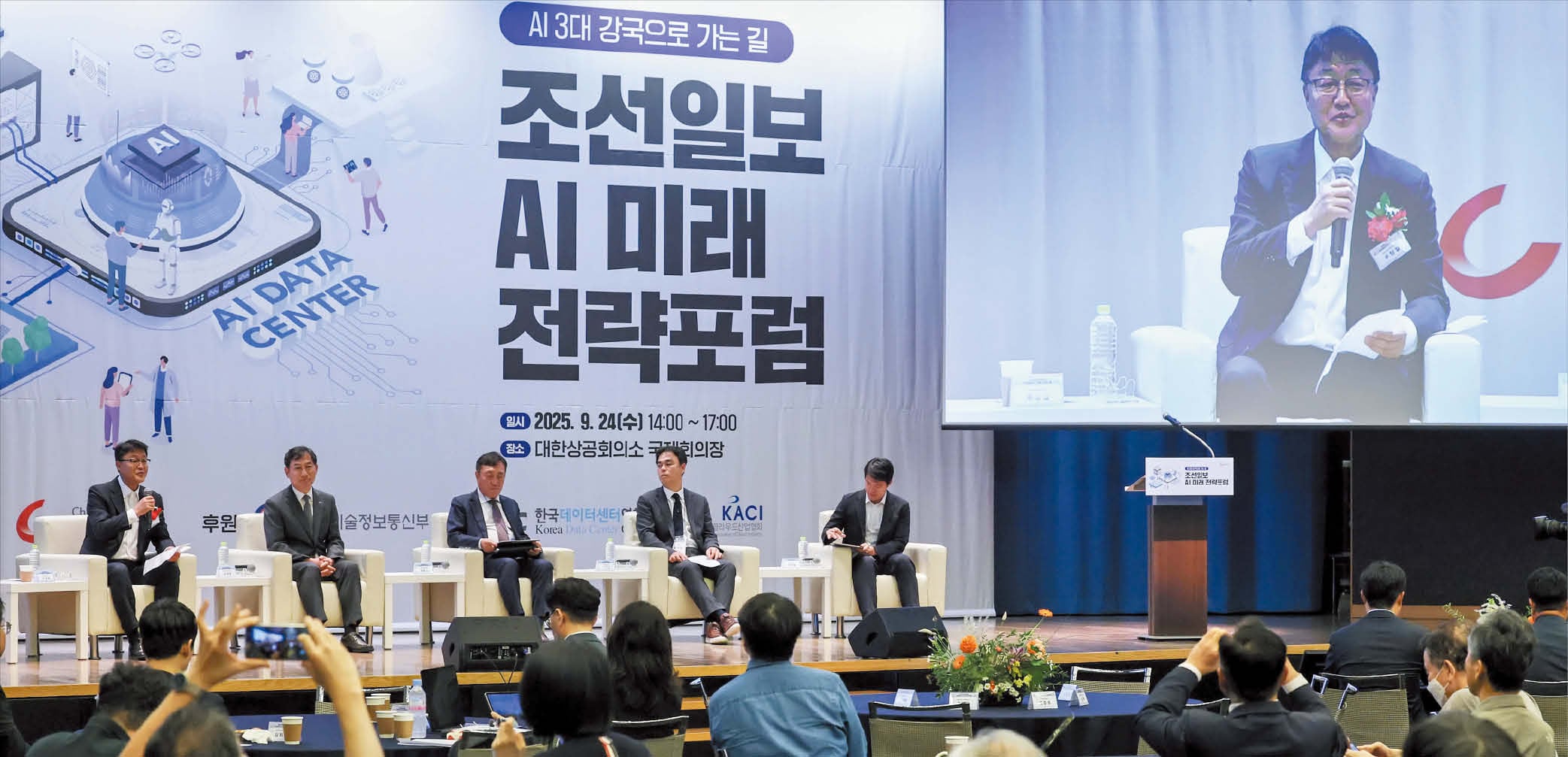
On the afternoon of the 24th, an “AI Strategy Forum” was held at the Korea Chamber of Commerce and Industry in Jung-gu, Seoul. Hosted by Chosun Ilbo, the event brought together experts, policymakers, and industry leaders to discuss strategies for revitalizing the domestic AI industry. The forum focused on the theme “The Path to Becoming a Top Three AI Power,” with participants sharing insights on various aspects of AI development.
Key topics included the need to enhance data center infrastructure, which is essential for AI operations. Around 100 attendees, including Kim Hyun from the Democratic Party of Korea, Choi Hyung-doo from the People Power Party, and Koo Hyuk-chae, First Vice Minister of the Ministry of Science and ICT, participated in the discussions. In a video message, Rep. Choi Min-hee, chairperson of the Science, ICT, Broadcasting and Communications Committee, emphasized the importance of cooperation between the National Assembly and government to establish effective strategies and improve laws and systems.
Building Competitive Data Centers
The first session of the forum focused on the significance of building competitive data centers, which serve as the backbone of AI technology. These facilities house thousands of graphics processing units (GPUs) and are crucial for storing and transmitting data. Choo Hyung-chul, a planning committee member of the National Policy Committee, highlighted that developing strong data centers is vital for AI progress.
Kim Deuk-jung, vice president of the National IT Industry Promotion Agency (NIPA), pointed out that the U.S. is investing heavily in its “Stargate Project,” aiming to build large-scale AI supercomputing infrastructure. He suggested that South Korea should develop its own data center model to compete globally. Chae Hyo-geun, former executive director of the Data Center Federation, noted that while many private data centers are planned, most are located in the capital region. To ensure sustainable growth, he called for cultivating talent in non-capital regions.
Regulatory improvements were also discussed. Choi Ji-woong, CEO of KT Cloud, advocated for unifying overlapping regulations and implementing long-term incentives such as tax benefits. Jang Gi-cheol, head of the Ministry of Science and ICT’s Internet Promotion Division, mentioned the push for a “Special Act on AI Data Centers” to streamline administrative procedures.
Securing Power and Infrastructure
The second session addressed the importance of securing reliable power for data center operations. Mok Hyung-soo, a professor at Konkuk University, emphasized that AI requires high-density computing data centers that consume significant amounts of power. Lee Sang-jun, a professor at Seoul National University of Science and Technology, noted that businesses will invest only if a stable power supply is guaranteed. He also stressed the need for related infrastructure when building data centers in new regions.
Hyun Chul-ho, former executive director of IGIS Asset Management, highlighted that energy will be a key determinant of future AI competitiveness. He called for the development of a smart power infrastructure based on renewable energy. Experts also emphasized the importance of efficient energy management. Kim Young-kwang, CEO of AI and cloud software company Orchestro, suggested introducing software that reduces energy consumption. Kim Hee-tae, a professor at the Korea Institute of Energy Technology, pointed out the challenges of energy AI algorithm research due to high security requirements, calling for regulatory improvements in data utilization.
Park Gyu-hyun, former executive director of Microsoft Korea, concluded that growth in the AI era will be achieved through innovative infrastructure and energy strategies. This collaborative approach underscores the shared vision of South Korean leaders to harness the potential of AI for national prosperity.


Comments
Post a Comment