Startups Chase Moon's 'Dream Fuel' and Asteroid Metals
The Future of Space Mining: A New Era of Resource Extraction
Space mining is no longer a concept confined to science fiction. With the rapid advancement of technology and the increasing demand for rare resources, companies around the world are actively exploring the potential of extracting materials from celestial bodies such as the Moon and asteroids. This new frontier is driven by economic incentives, technological progress, and the need for sustainable resource solutions.
Economic Value of Space Resources
The Moon is emerging as a prime target for space mining due to its abundance of valuable resources. It contains significant quantities of helium-3, a rare isotope that holds immense potential as a clean energy source. Helium-3 is considered a "dream fuel" because it can generate energy equivalent to 40 tons of coal per gram and is ideal for nuclear fusion. NASA estimates that the Moon has about 1 million tons of helium-3, which could be worth up to $2 quadrillion—far exceeding the U.S. GDP in 2024.
In addition to helium-3, the Moon is rich in rare earth elements used in semiconductors, displays, and other high-tech applications. These elements are critical for modern industries but are scarce on Earth. As global demand for these materials continues to rise, the Moon offers a promising alternative.
Asteroids are also seen as treasure troves of valuable metals. For example, the asteroid 16 Psyche is estimated to hold resources worth $10 quadrillion. Companies like AstroForge are developing advanced spacecraft to mine these asteroids and bring back precious metals such as platinum, palladium, and iridium. The economic potential of asteroid mining is enormous, with some estimates suggesting that successful operations could yield profits far exceeding traditional Earth-based mining.
Hard-to-Obtain Resources on Earth
Many of the resources found in space are either extremely rare or difficult to obtain on Earth. Helium-3, for instance, is present in only trace amounts in Earth's atmosphere, making it highly expensive and challenging to extract. On the Moon, however, helium-3 has accumulated over billions of years due to the lack of a dense atmosphere to block solar winds.
This scarcity has led to growing concerns about the future supply of critical materials. Countries like China control a large portion of the global rare earth element supply chain, while Russia dominates the production of palladium. As geopolitical tensions continue to affect international trade, space mining offers an alternative way to secure essential resources without relying on a few key countries.
Technological Advancements Enable Commercialization
Significant advancements in space technology have made commercial space mining more feasible than ever before. Companies like SpaceX have drastically reduced the cost of launching payloads into space through reusable rocket systems. This reduction in costs has opened the door for private companies to explore and exploit space resources.
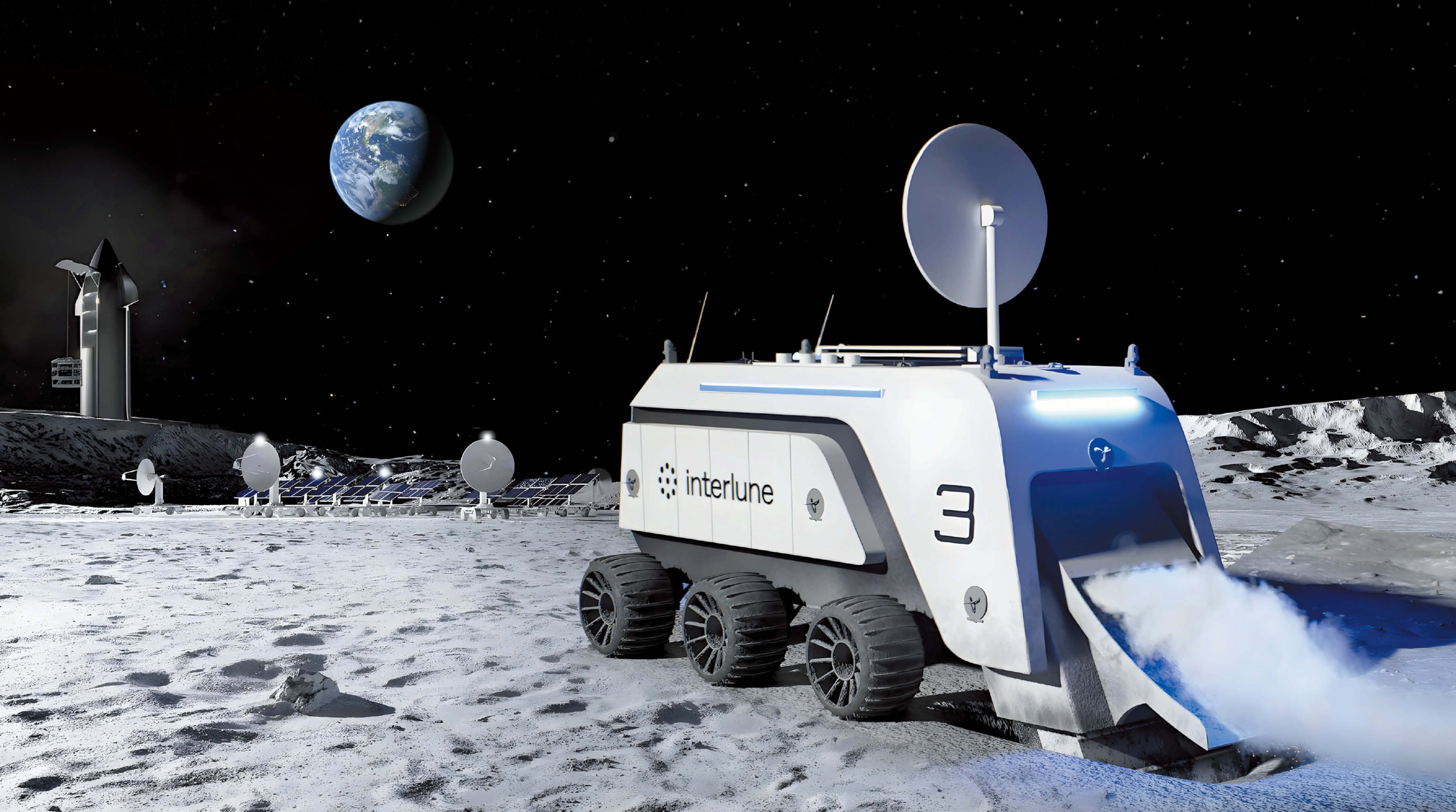
On the Moon, robots and autonomous systems are being developed to withstand extreme conditions. These machines must endure temperature fluctuations ranging from -246°C at night to 121°C during the day, as well as navigate through sharp regolith particles. Companies like Interlune are working on advanced robotics capable of operating in these harsh environments, with plans to deploy lunar rovers equipped with multispectral cameras to map helium-3 deposits.
Other companies, such as OffWorld, are developing "smart swarm" technology that allows robots to work together autonomously, even in areas with poor communication. These innovations are crucial for the success of space mining operations, as they enable efficient and reliable resource extraction.
South Korea's Role in the Space Mining Race
While many countries are making significant strides in space mining, South Korea still has a long way to go. Private companies in the country have not yet actively pursued lunar or asteroid mining, and state-led initiatives remain limited. However, efforts are underway to catch up with global competitors.
South Korea’s space budget is significantly lower than that of major spacefaring nations like the U.S. and China. In 2023, the country allocated $700 million for space activities, compared to $74 billion for the U.S. and $16 billion for China. Despite this, there are plans to develop lunar exploration capabilities. The Korea Institute of Geoscience and Mineral Resources (KIGAM) is working on advanced equipment to analyze lunar resources, while companies like UEL are preparing to send small rovers to the Moon by 2027.
Looking ahead, South Korea aims to develop more advanced rovers capable of performing resource mining on the Moon. These efforts highlight the country's commitment to becoming a player in the global space mining industry.


Comments
Post a Comment