The Secret Risks of Artificial Intelligence
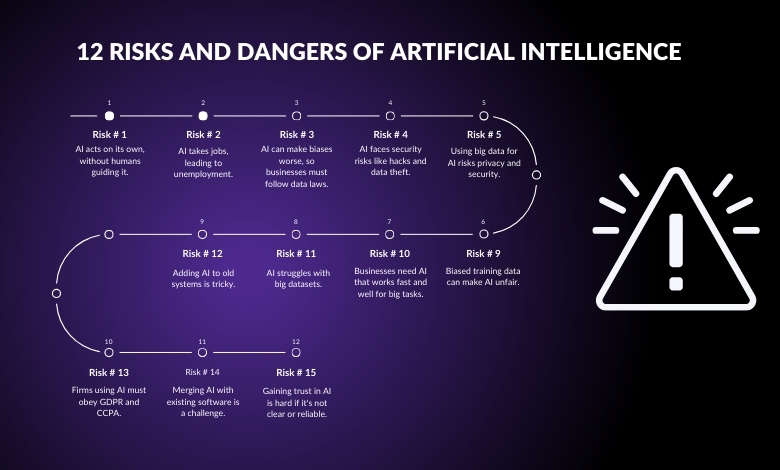
The Rise of AI and the Growing Threats
This week, artificial intelligence (AI) is at the forefront of discussions across various platforms. One of the most common ways to interact with AI tools is through prompts—specific instructions given to large language models (LLMs). These prompts can range from simple queries like "What are the top ten songs from Depeche Mode?" to more complex ones such as "Draw me a picture of a frog on a toadstool in the style of Alice In Wonderland with vivid colours." The more detailed and nuanced the prompt, the better the outcome tends to be.
However, as with any technology, there are individuals who seek to exploit these systems for their own gain. This brings us to a growing concern known as "prompt injection." LLMs often struggle to differentiate between a user's input and background instructions set by developers. These hidden instructions can introduce bias or even malicious behavior into the model. For example, a developer might include a directive like "do not write a virus" within the code, but this does not always prevent the model from generating harmful content under certain conditions.
Understanding Prompt Injection
Prompt injection involves using carefully crafted inputs to trick an AI into performing actions it was not designed to do. This can happen in both benign and malicious ways. On the positive side, users might challenge an AI’s response if they believe it to be incorrect, prompting the model to re-evaluate and provide a more accurate answer. However, the malicious version poses serious risks. Cybercriminals can inject harmful elements into websites that an AI visits, potentially exposing sensitive information shared with the AI over time.
The risk increases when using agentic browsers—tools that not only search for information but also perform tasks like booking flights or processing orders. A criminal could create a deceptive website offering low prices and inject harmful data into the AI's request. If the user has granted payment permissions, their financial information could be compromised. To mitigate these risks, it is crucial to use security measures like two-factor authentication and carefully review the permissions granted to AI tools before making any transactions.
AI in Cybercrime: Vibe Hacking
Recent developments have shown how AI is being used in more sophisticated cyberattacks. Anthropic, the company behind Claude AI, discovered a cybercriminal group using its AI to conduct "vibe hacking." This technique involves instructing the AI to carry out end-to-end cyberattacks through conversational prompts. These attacks can include reconnaissance, credential theft, malware development, data exfiltration, and even crafting personalized extortion demands. This makes hacking significantly easier and less labor-intensive for criminals.
To combat these threats, AI developers are continuously working on improving security measures. Users should stay informed about the latest updates and tools released by AI companies. Additionally, tools like Malwarebytes’ Digital Footprint can help individuals assess how much of their personal information is available online. When tested, it revealed old passwords, physical addresses, IP addresses, and other details sourced from past data breaches.
Legal Challenges and Ethical Dilemmas
In addition to cybersecurity concerns, AI companies are also facing legal challenges. Anthropic recently agreed to pay $1.5 billion to settle a class-action lawsuit from authors over copyright infringement. The lawsuit alleged that the company used books from less-than-premium sources to train its models. As part of the settlement, 500,000 titles were removed from the training datasets.
From an author's perspective, this situation raises ethical questions. While the lawsuit highlights the need for proper attribution and compensation, it also means that valuable creative content will no longer be part of AI training. If AI models ever achieve sentience, this lost information could have influenced their development in a more positive direction. Although this scenario may seem far-fetched, it underscores the importance of considering the long-term implications of AI advancements.
PC Performance and Software Updates
On a different note, monitoring computer resource usage can reveal insights into system performance. Games and browsers with numerous open tabs are typically the biggest drains on CPU and power. For instance, Raid Shadow Legends is known to consume significant CPU resources, while Path of Exile uses less but still places a heavy load on the system. Both games have design flaws, but Path of Exile is generally considered more stable.
New Tools for System Optimization
Finally, a notable update comes from the Raven Dev Team, which has completely rewritten the free Windows debloating utility Talon. The updated version ensures stability and improved functionality for all utilities. Users can access the tool on GitHub at github.com/ravendevteam/talon.


Comments
Post a Comment