This Chinese EV's Fire Strategy: Jettison the Entire Battery
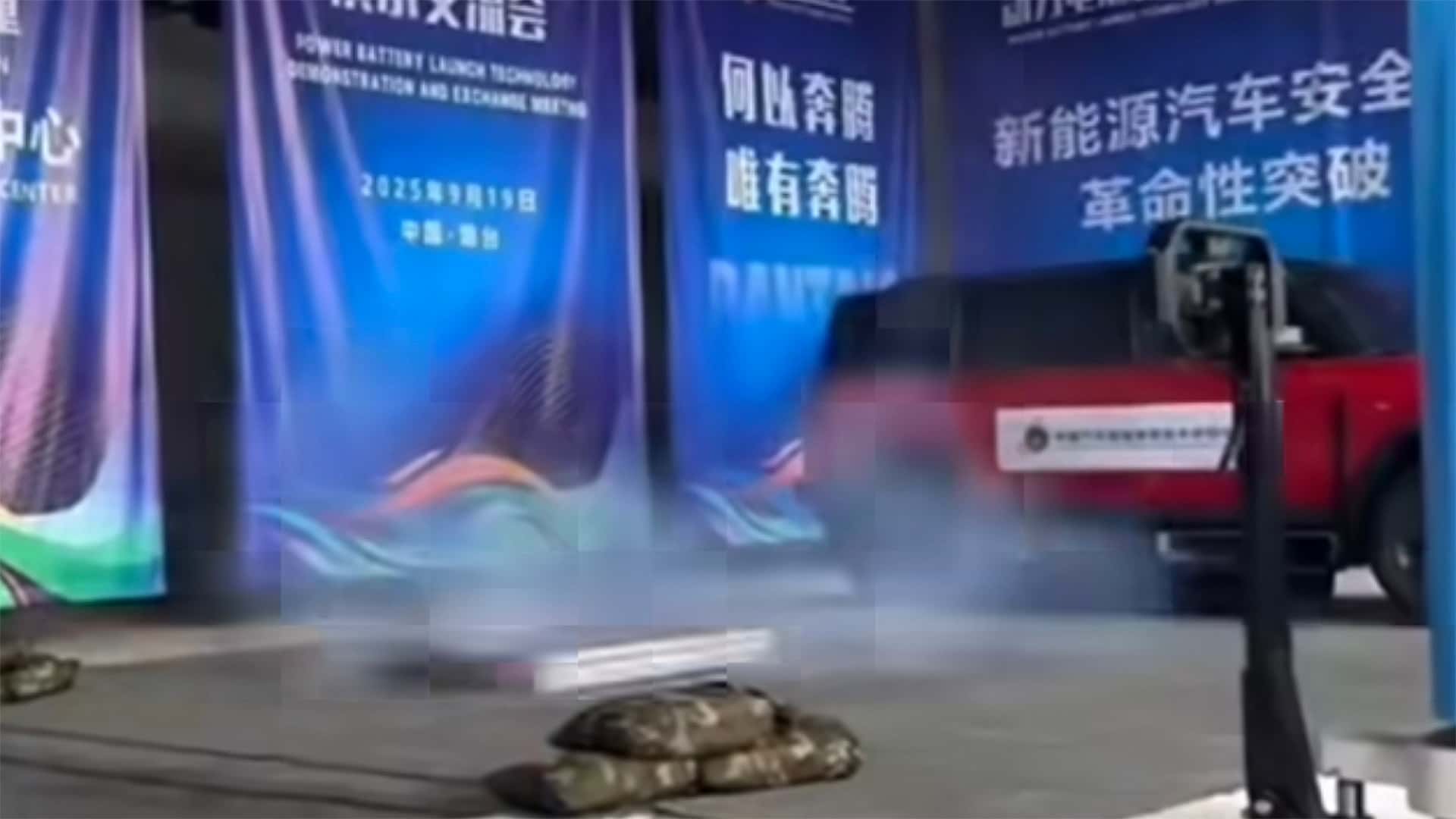
Innovative Approach to EV Fire Safety in China
China is exploring a novel method to address the growing concern of electric vehicle (EV) fires. One of the most unconventional solutions involves ejecting the burning battery from the vehicle. While this approach might seem alarming at first glance, it raises important questions about safety and effectiveness.
The system tested by Chinese researchers involves an automated mechanism that launches the battery pack up to 20 feet away from the vehicle within less than a second after detecting thermal runaway. This rapid ejection aims to protect the occupants inside the car and prevent the entire vehicle from catching fire. The process is designed to ensure that emergency crews can handle the battery more safely once it's removed from the undercarriage of the vehicle.
Despite its potential benefits, the current iteration of this technology appears risky. The video showcasing the demonstration highlights the dramatic ejection of the battery pack, which could pose a significant danger to nearby vehicles or pedestrians. A smoldering battery weighing hundreds of pounds hurtling through the air could cause severe damage or injuries. Therefore, this solution is still in the early stages of development and requires further refinement before it can be considered safe for widespread use.
Electric vehicle battery fires are a serious issue. Although they are statistically less frequent than fires in traditional gasoline-powered vehicles, they present unique challenges for emergency responders. Once a single cell in the battery pack ignites, it can trigger a chain reaction known as thermal runaway. This phenomenon is extremely difficult to control and can lead to intense heat and flames that are hard to extinguish.
In many European countries, firefighters often resort to submerging the entire vehicle in a large water tank to ensure that the fire is completely put out. However, even underwater, EV batteries can continue to burn, reaching temperatures over 1,800°F (1,000°C). By isolating the battery pack from the rest of the vehicle, the ejection system could make the firefighting process significantly easier.
While the concept of ejecting a burning battery is still in its infancy, it represents an innovative attempt to tackle a pressing problem. If refined with advanced sensors, cameras, and artificial intelligence, this technology could potentially evolve into a safer and more practical solution. The system would need to be able to control the force and direction of the ejection to minimize risks to people and property.
Experts are closely watching developments in this area, as the safety of electric vehicles remains a critical concern. Several breakthroughs have been made in recent years, including advancements in solid-state batteries and new methods to prevent thermal runaway. These innovations could pave the way for more reliable and secure EV technology in the future.
As the adoption of electric vehicles continues to grow, so does the need for effective fire safety measures. The idea of ejecting a burning battery may seem extreme, but it highlights the importance of thinking outside the box when addressing complex challenges. Whether this specific solution will become a standard feature in future EVs remains to be seen, but it underscores the ongoing efforts to make electric transportation safer for everyone.


Comments
Post a Comment